Introduction
Ilse Schreiber-Noll is a local artist who has lived and worked in the Hudson Valley for many years. She was born, however, in a small town near Kassel, Germany and grew up there in the 1950s and 60s, when many were confronting the country’s recent past. She studied at the University of Marburg and for a time worked as a physical therapist. Eventually she moved to the United States and pursued an interest in art. She studied with the renowned Italian-Uruguayan woodcut artist Antonio Frasconi and obtained an MFA from the State University of New York at Purchase in 1989. Beginning in the early 90s, she taught printmaking and book arts at Manhattanville College and SUNY-Purchase. She has of course also been active in producing her own work, in a variety of media. A significant number of her artist’s books are held by Vassar’s Archives & Special Collections Library.
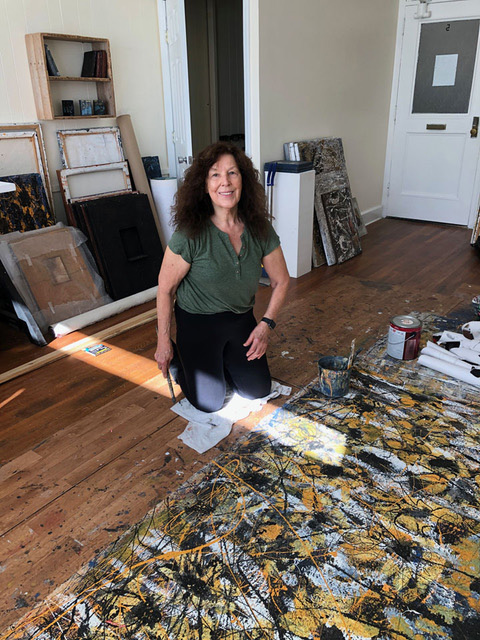
Even a quick glance at Schreiber-Noll’s catalogue makes clear her concern for a range of social issues in our time. Her books in particular have dealt with such things as war, pandemic, natural disasters, environmental degradation, and their impact on humans. Given this, it comes as no surprise that the artist has participated in several political art activities, such as Art Against Apartheid, Artists Against the Death Penalty, and the Peace Tower Project—an anti-war exhibition shown at the Whitney Museum. In producing her books, Schreiber-Noll has drawn inspiration from the texts of a number of poets and writers, including Walt Whitman, Bertolt Brecht, Langston Hughes, and Octavio Paz. She has collaborated closely with Joseph Brodsky, Dennis Brutus, and Galway Kinnell.
The current Vassar Library exhibition focuses on two related themes in Schreiber-Noll’s work: nature, and nature defiled. The show therefore is divided into two sections. The first presents books by Schreiber-Noll that deal with nature and its beauty. Several different aspects of nature are treated: sun, sky, river, flowers, trees, insects. The second section deals with nature as it has been defiled; in other words, as it has been tainted by human activity and climate change. Here we see the effect of pollution on the earth, on waterways, on plant life, in our habitats. These artist’s books are part of a much larger oeuvre that includes woodcuts, paintings, sculpture, and multi-media. The examples shown here give some indication of an artist at work, trying to express both appreciation and concern for the natural world around us.
Ronald Patkus
Head of Special Collections
This page has paths:
- Nature, and Nature Defiled vclibrary